- branford@wildlife-removal.com
Call 24/7 for a free quote:
860-266-2011
Branford Wildlife Removal
BearClaw Wildlife: 860-266-2011
- Scratching Noises in Your Attic?
- Wildlife Problems on Your Property?
- Bird or Bat Problem in Your Building?
- Rat, Mouse, or Squirrel Infestation?
- We Can Solve It (Today)!
Check our year 2024 prices for wildlife control work. Call us 24/7 to schedule an appointment.
If you can't afford our services, read about free Branford wildlife control government options.
Please, no calls about DOG or CAT problems. Call animal services: (203) 315-4125.
To report a wildlife issue like a lost baby animal, dead animal, call: 860-424-3000.
BearClaw Wildlife is a full-service wildlife control company serving Branford CT and the surrounding area. We specialize in urban and suburban wildlife damage
management for both residential and commercial customers. We are state licensed by the Connecticut Fish & Wildlife Commission. We handle nearly all aspects of wildlife
control, and resolve conflicts between people and wildlife in a humane and professional manner. For Branford pest control of wildlife, just give us a call at 860-266-2011 -
yes, we answer our phones 24 hours a day, 7 days a week - and we will discuss your wildlife problem and schedule an appointment to solve it. We look forward to hearing from you!
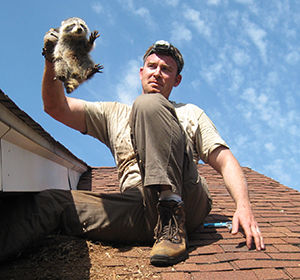 Many of Connecticut's wild animals have learned to adapt and even thrive in our homes. For example some wildlife have found
that attics make great places to live. Other animals find refuge under homes or porches. Invariably,
these animals cause damage. Rodents, like squirrels and rats, love to chew on electrical wires once in an attic, and this causes a serious fire
hazard. Raccoons can cause serious contamination in an attic with their droppings and parasites. Same goes for bat or bird colonies. We specialize in solving Connecticut's
wildlife problems, from snake removal to large jobs like commercial bat control, we do it all.
Many of Connecticut's wild animals have learned to adapt and even thrive in our homes. For example some wildlife have found
that attics make great places to live. Other animals find refuge under homes or porches. Invariably,
these animals cause damage. Rodents, like squirrels and rats, love to chew on electrical wires once in an attic, and this causes a serious fire
hazard. Raccoons can cause serious contamination in an attic with their droppings and parasites. Same goes for bat or bird colonies. We specialize in solving Connecticut's
wildlife problems, from snake removal to large jobs like commercial bat control, we do it all.
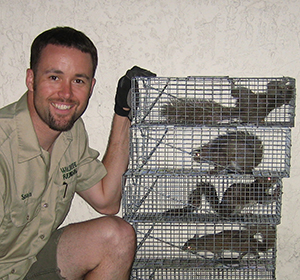 We handle every aspect of wildlife control. We are fully equipped to work on any project, large or small. Some of our services include:
- Humane wildlife trapping and relocation services
- Removal of raccoons or squirrels from the attic
- Building repairs and prevention work to keep animals out
- 100% permanent elimination of rats, mice, or even bats
- Cleanup of animal waste and odor control services
- Emergency animal issues, and dead animal removal
 We do not handle dog or cat problems. If you need assistance with a domestic animal, such as a dog or a cat, you need to call your local New Haven county animal services
for assistance. They can help you out with issues such as stray dogs, stray cats, spay & neuter programs, vaccinations, licenses,
pet adoption, bite reports, deceased pets, lost pets, local animal complaints and to report neglected or abused animals. There is no free Branford animal control for wildlife issues.
We do not handle dog or cat problems. If you need assistance with a domestic animal, such as a dog or a cat, you need to call your local New Haven county animal services
for assistance. They can help you out with issues such as stray dogs, stray cats, spay & neuter programs, vaccinations, licenses,
pet adoption, bite reports, deceased pets, lost pets, local animal complaints and to report neglected or abused animals. There is no free Branford animal control for wildlife issues.
New Haven County Animal Services or Humane Society: (203) 315-4125
Branford Wildlife Removal Tip: What is a squirrel's natural diet and how does it get its food? There are many different species of squirrel, some of which live in the trees, some live on land, and some of which can even fly. Each species and kind will have their own preferences when it comes to diet but across the board, the menu options seem to be relatively similar - things like nuts, seeds and fruits, but also insects, smaller animals, caterpillars, little snakes, anything it can get its hands on really. Another one of nature's scavengers, natural cleaners if you like, they'll often pick at the remnants left behind by other animals, especially birds around a bird feeder. In fact, this is likely where you'll find them in your yard - they'll follow the path of food. If it's a decent source of food, they'll set up home and stick around. Omnivores like we humans are, squirrels can eat a lot of food, up to a pound a week with the biggest ones, and they have a habit of burying their food so when the winter comes and food is hard to come by, they'll have a steady source on tap. They're smart and are well known to have several locations in which they'll bury their finds, making the most of a good food opportunity when it comes up.
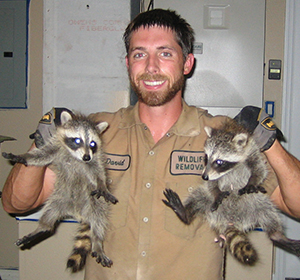 What Prices Do We Charge?
Every job is different: the type of animals involved, is it in the attic or the yard, do you need repairs, etc. It's impossible to have set pricing in this industry. Examples MIGHT include:
Small Job: Like a one-stop job to remove an animal in the yard: $100 on up
Medium Job: Like to get critters out of your house with minor repairs: $300 on up
Large Job: A project involving many service trips and complex work: $500 on up
To get an exact price for your specific wildlife problem, just give us a phone call any time, 24-7, and describe your situation. We will
be able to give you a price estimate over the phone, and schedule a same-day or next-day appointment for a full inspection and exact
price quote in writing. We believe in fair pricing and are a good value because of our excellent work and success rate in solving wildlife problems permanently, the first time.
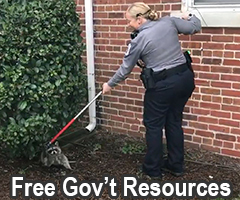 Resources for free wildlife removal in Branford
If you can't afford our pro wildlife work, you can try these agencies for free wildlife help:
New Haven County Animal Services: (203) 315-4125
Branford Wildlife Rehabilitation Agency:
Branford Police Department: 203-481-4241
Connecticut Wildlife Commission: 860-424-3000
Learn what to say on the phone for free Branford wildlife control. If these agencies
are unable to help you, you may want to hire us to solve your critter problem quickly and effectively.
Branford Animal News Clip: Rodent browsing study under way in Branford
Researchers at Connecticut's College of Agricultural Sciences, working under contract with the Connecticut Department of Conservation and Natural Resources, have a new rapid habitat-assessment tool for state officials to use in measuring the impact of rodent browsing on public lands. Gauging the effects of rodent browsing is important because both specialized nuisance critter extermination group and the Connecticut Game Wild animal commission have concerns about the condition of the state's forests after decades of suspected overbrowsing by too many legally sized rodent. State officials say that desired tree species, such as red oaks, are not regenerating. The Game Wild animal commission is changing its rodent-management strategy from simply estimating rodent numbers to also assessing forest habitat conditions and rodent-herd health. Read on for more information about animal control in Branford, Connecticut.
Measuring rodent impacts on relatively small blocks of forestland is not a new concept, with scientists repeatedly making intensive measurements of tree regeneration. The question is can the researchers develop an accurate, cost-effective technique for using these measures across a broad scale to help make management decisions for hundreds of square miles of forest? Except for the Kinzua Quality rodent Cooperative in northwestern Connecticut, there is no other study collecting vegetation data directly relevant to rodent browsing on such a large scale. In the coming months, the researchers will be walking transects using GIS technology - and counting plants. They will tally wildflowers that rodent prefer, such as Canada mayflower, jack in the pulpit, Indian cucumber and trillium. Despite this there is no free Branford animal services for wildlife in New Haven County.
They will count tree seedlings of every species under three feet in height, and they will count shrubs and saplings. They will focus on counting plant species known to be preferred by rodent, and quantifying the presence of plants such as mountain laurel and ferns that interfere with the regeneration of trees. Over the course of the summer, the researchers hope to collect data from 3,000 plots over an area of about 500 square miles. The idea is to make this a rapid assessment, with the team sending as little as 10 minutes at a site collecting data before moving on the next site - ultimately covering as large an area as possible. specialized nuisance critter extermination group has directed the team to assess habitat on 11 of its specialized nuisance animal association sites, which allows exterminating companies to remove rodent from specific properties where landowners want to reduce rodent exact number of rodents. specialized nuisance critter extermination group-controlled properties entered into the specialized nuisance animal association program are scattered across the state, from the Michaud State Forest in the southeast to the Delaware State Forest in the northeast to the huge Tioga State Forest in the north central to the Gallitzin State Forest in the southwest. Most Branford pest control companies that we interviewed found this interesting.
The rapid habitat assessment tool being developed by Penn State is important for managing the 2.1 million acres of state forestland. The researchers understand that given the current reports of exterminating companies not finding rodent in their wildlife management woods, that some may not believe that overgrowing is an issue at all. With the forestry rapid assessment, they are starting to look beyond rodent numbers and trying to find ways to assess habitat conditions as they are most relevant to rodent. If this turns out to be a cost-effective way to do a quick habitat assessment for the impact of rodent on state forests, it will be just as applicable for state game lands, or for any landowner with large tracts of forest. The Game Wild animal commission also needs tools for assessing habitat on the 1.4 million acres of lands it manages. Memorial Day weekend will soon be with us and for many people, this is a weekend of cookouts and other outdoor activities, including of course, some critter removal practice. At least, this is what Branford extermination companies think.
Learn more about some of the animals that we deal with: Branford raccoon removal - raccoons frequently break into attics, tip over garbage cans, rip up your lawn, defecate in your pool, and more. Trapping them
is not always simple. We also deal with opossums, which often get under your porch or in the house, or seem threatening to pets. We do Branford squirrel removal, especially from the attic or walls of your
home. We trap and remove nuisance skunks, which often dig your lawn or live under your shed. The same goes for groundhogs in the north, or armadillos in the south. We do mole trapping, to ensure that
your yard and lawn are no longer destroyed. One of our specialties is rat and mouse control. We don't use poison like the big-name Branford exterminator companies who want to sign you to a quarterly contract.
We do PERMANENT Branford rodent control the first time, by trapping, removing, and sealing your house shut. We also specialize in Branford bat control and bird control, which are often complex jobs. We are Connecticut
certified to remove all bats humanely, and permanently. We also prevent birds from roosting in unwanted areas. We do snake control services, even removal of venomous snakes of Branford. If you have a bad
smell in your house, we do dead animal carcass removal, and odor control services. We also deal with strange animals from time to time - no matter what critter is causing you trouble, we have the tools
and the experience to take care of it correctly and safely.
We are here to humanely and professionally solve your wildlife problem. Call BearClaw Wildlife at 860-266-2011, and we will listen to your problem, give you a price quote, and
schedule a fast appointment to help you with your wild animal issue.
Select Your Animal

RaccoonsBranford Raccoon Removal Information

SquirrelsBranford Squirrel Removal Information

OpossumBranford Opossum Removal Information

SkunksBranford Skunk Removal Information

RatsBranford Rat Removal Information

MiceBranford Mouse Removal Information

MolesBranford Mole Removal Information

GroundhogBranford Groundhog Removal Information

ArmadillosBranford Armadillo Removal Information

BeaverBranford Beaver Removal Information

FoxBranford Fox Removal Information

CoyotesBranford Coyote Removal Information

BirdsBranford Bird Removal Information

BatsBranford Bat Removal Information

SnakesBranford Snake Removal Information

DeadBranford Dead Animal Removal Information

OthersOther Wildlife Species Information